How to Trade Meme Coins Without Blowing Up Your Account
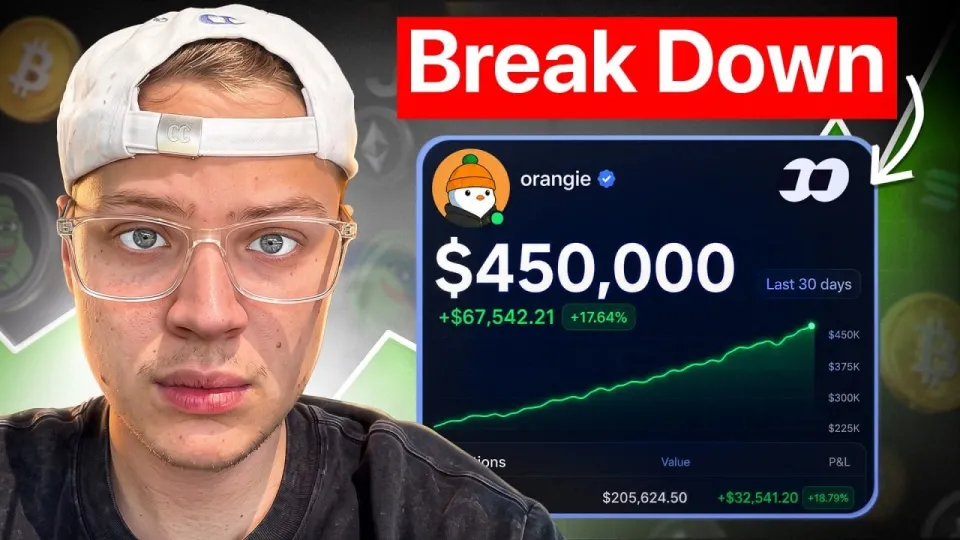
Video: How I Made $450,000 Trading Memecoins in 30 Days
Need articles like this for your video? They help promote it on YouTube and Google — order them in the Telegram bot @sat_sit_bot. The bot writes and publishes the articles itself (with your YouTube video embedded) on popular topical websites (no ads). Try it free: 50 articles on us.
· based on the channel Orangie Web3
Key takeaways
- Meme coins are narrative-driven tokens with no cash flow; price is set by attention and liquidity, so risk management matters more than conviction.
- Orangie Web3's video frames a $450,000 result over 30 days as the outcome of many small, asymmetric bets rather than one perfect call.
- Most traders lose the majority of their first deposit; the model only works if losses stay tiny and a single winner can cover them.
- Solana memecoins dominate the category because low fees and fast blocks make launching and trading new tokens cheap.
- Trading alongside large private groups creates an information edge most retail traders do not have — treat their calls as context, not signals.
Meme coins are highly volatile tokens whose price is driven by attention, community and liquidity rather than revenue or cash flow, so the practical way to trade them is to risk a small, fixed slice of capital per bet and let a few asymmetric winners pay for many small losses. That is the model behind Orangie Web3's breakdown of a $450,000 run over 30 days, and the same logic applies whether you start with $100 or $10,000. If you want to follow the trades and the community around that approach, the access plan is here: join the Kaizen Group on Whop.
What a meme coin actually is and why it moves so fast
A meme coin is a token with no product, no revenue and usually no roadmap — its value comes entirely from the collective belief that someone else will pay more for it later. That makes it a pure attention market: a joke, a mascot, a TikTok trend or a single influencer post can reprice the whole thing in minutes, and the same silence can send it to zero. Classic examples like Dogecoin built decade-long communities, but most new launches on Solana live and die within days.
Because there is no fundamental anchor, price discovery happens in the liquidity pool. When buyers arrive faster than sellers, price gaps up violently; when the pool is thin, one large sell can wipe out 80% of the chart. Understanding this mechanic is the difference between treating meme coins as a lottery ticket and treating them as a tradable, if extremely risky, asset class.
How to trade meme coins in five practical steps
A repeatable process beats intuition, and the process below is what separates a survivable meme coin strategy from gambling. Each step is designed to cap the damage of being wrong, because being wrong most of the time is normal here.
- Size every bet as money you can lose entirely. A common rule is 1–5% of your trading stack per position. If a loss would change your month, the position is too big.
- Check liquidity before anything else. Look at pool depth, holder count and whether the top 10 wallets own a large share. Thin liquidity plus concentrated holders is how rugs happen.
- Verify the contract. Confirm the mint address from an official source, check that mint authority is revoked and that there is no freeze authority, and scan for honeypot behaviour before buying.
- Define your exit before entry. Decide in advance what price takes you out at a loss and what portion you sell at 2x, 5x and 10x. Scaling out is how traders convert volatility into realised money.
- Log every trade. Entry, exit, thesis, outcome. Reviewing the log weekly is how you learn which narratives and which entry timings actually work for you.
Why Solana became the home of memecoins
Solana memecoins dominate the category because the chain makes launching and trading new tokens almost free and nearly instant. Transaction fees of a fraction of a cent and sub-second block times mean a trader can enter and exit a position without the gas costs eating the edge, and platforms like Pump.fun turned token creation into a one-click action, which is why thousands of new tickers appear every day.
The trade-off is competition. When anyone can launch a coin in seconds, the supply of new tokens vastly exceeds the supply of real buyers, so most launches fade within hours. The winners are usually the ones with a genuinely funny or culturally sticky meme, an active community, and enough early liquidity to survive the first wave of profit-taking. Speed matters, but filtering matters more.
The uncomfortable truth about six-figure meme coin results
Large reported gains in this niche almost always come from an information and execution edge that is invisible in a highlight reel. Traders who post $450,000 months are typically inside private groups where dozens of experienced traders share early calls, watch the same new launches in real time and coordinate entries — a structural advantage a solo trader scrolling a chart does not have. That does not make the results fake, but it does mean the outcome is not easily reproducible by copying trades after they are public.
The second uncomfortable truth is variance. Meme coin P&L is extremely skewed: a handful of positions produce nearly all the profit while dozens of small trades lose most of their value. A trader who turns $100 into $90 on ten attempts and then 3x's on one narrative-driven coin is following the same maths as someone reporting a six-figure month. The plan only works if the losing attempts are small enough that you are still in the game when the winner arrives.
Common questions traders ask before their first trade
Most beginners arrive with the same three doubts: how much to start with, how to avoid rugs, and how to handle the pace. Starting small is not a compromise — it is the correct first step, because the goal of the first month is to learn execution (wallets, slippage, limit orders, selling into strength) without paying tuition at full size. Losing 90% of a $100 experiment is a cheap lesson; losing 90% of your savings is not.
On rugs, the checklist is mechanical: revoked mint authority, no freeze authority, distributed holders, locked or burned liquidity, and a contract address confirmed from the project's own channel rather than a random reply. On pace, the honest answer is that this market moves faster than any explainer video can, so the skill to build is a pre-written checklist you can run in under two minutes — because that is roughly how long you have before a new launch is either confirmed or dead.
Useful links
- Kaizen Group access on Whop — the paid community plan referenced in the video.
- FOMO trading platform — the trading interface used for the trades shown.
- Orangie's Discord — the meme coin community server.
- Orangie on Instagram — short-form updates and clips.
The takeaway
Meme coin trading is a risk-management discipline dressed up as a joke-coin casino, and the traders who last are the ones who cap their downside before they chase upside. The $450,000 figure in Orangie Web3's 30-day experiment is best read as evidence of what asymmetric sizing plus an information edge can produce, not as a baseline expectation for a beginner with a small account. Start with money you can lose, verify every contract, take profits in tranches, and keep a log so that each loss teaches something. If you want to see the trades and the reasoning behind them in more detail, the Kaizen Group plan is the entry point the channel points to, and the Orangie Web3 channel itself is the author of this breakdown.
Source: How I Made $450,000 Trading Memecoins in 30 Days · Markdown version
Questions & answers
How much money do I need to start trading meme coins?
You can start with $50–$100, and that is genuinely the right size for a first month. The purpose of the first deposit is to learn execution — wallets, slippage, selling into strength — without paying full tuition. Scale up only after you have a logged track record of following your own rules.
Are meme coins on Solana safer than on other chains?
Not inherently safer — Solana is just cheaper and faster, which makes launching and trading tokens easier for everyone, including scammers. Safety comes from contract checks (revoked mint authority, no freeze authority, burned or locked liquidity) and from verifying the mint address via the project's official channel.
Why do so many traders lose most of their first deposit?
Because meme coin returns are extremely skewed: most positions go to near zero and a small number produce nearly all the profit. Traders who lose everything usually size positions too large to survive the losing streak that precedes a winner, or buy after the move is already public.
Can I copy the trades of experienced traders and get the same results?
Rarely, because the edge in large private groups is timing and shared information — by the time a call is public, the entry price has often moved. Copying can work as a learning tool for studying entries and exits, but it is not a substitute for your own sizing rules and exit plan.